
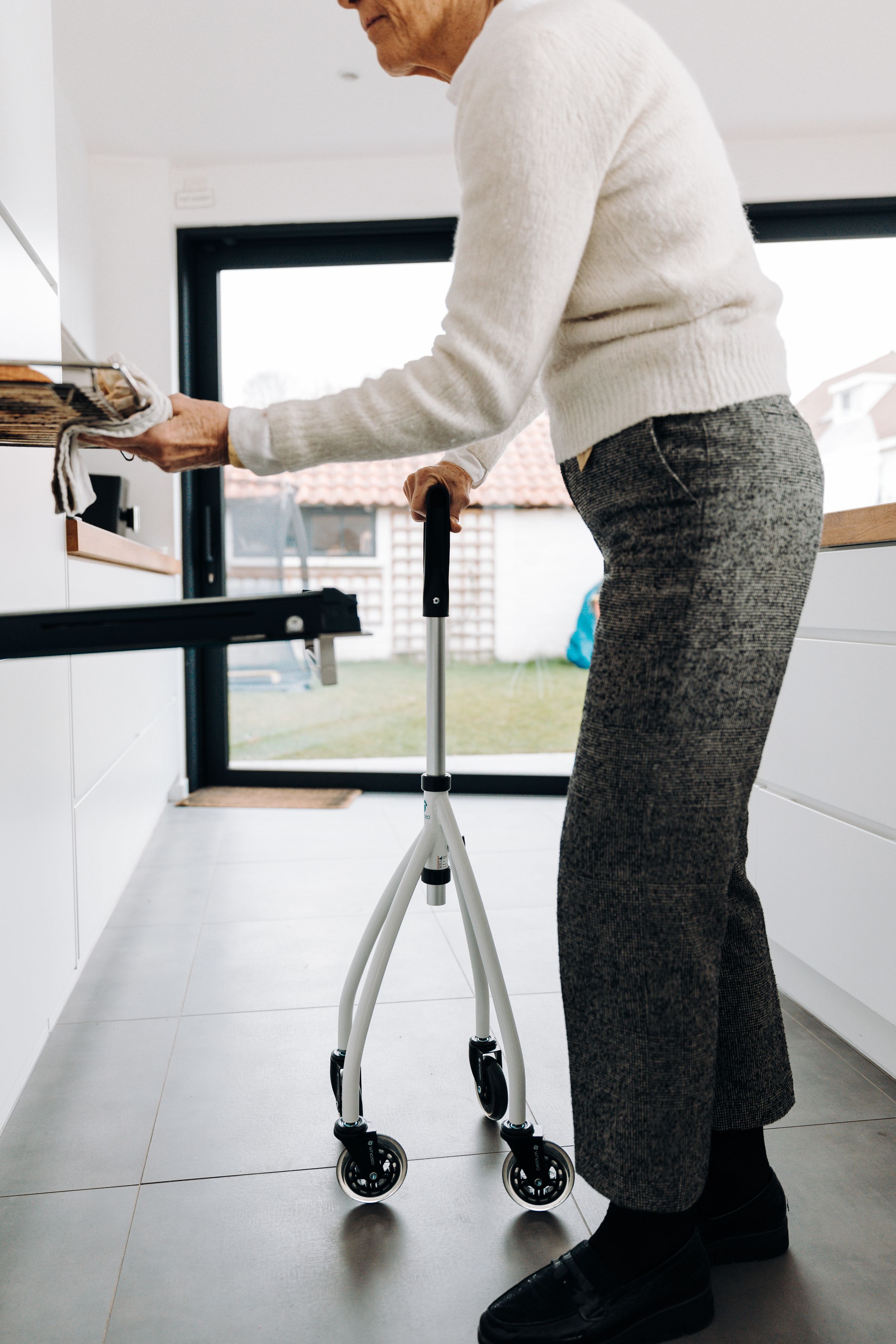
The right walker can help you stay safe, steady and independent. The wrong one can be uncomfortable, hard to use or even unsafe. Here are our physiotherapists' top 10 tips for choosing well.
1. Choose your walker with a physiotherapist
Physiotherapists are trained to assess what you need from a walker. We can tell you which type of walker, or other mobility aid, is the safest choice for you.
2. Choose comfortable handles
Some handles are soft foam and comfortable to hold. Others are hard plastic and can hurt your hands, especially if you have arthritis.
3. Make sure the brakes are easy to use
Some brakes are stiff and hard to squeeze or push down. The person who will use the walker should try the brakes themselves before buying.
4. Choose the right number of wheels
- Two-wheeled walkers are for people who need more support and are less steady on their feet.
- Four-wheeled walkers (rollators) are for people who are steadier.
- Small wheels work best indoors. Larger wheels handle outdoor surfaces better.
5. Check the wheel base
Make sure the wheels are far enough apart to feel stable, and that the walker still fits through the doorways in your home.
6. Choose a comfortable seat and backrest
- Look for a wide seat that feels comfortable when you sit down.
- The backrest should be firm but not painful. Cloth backrests feel softer but give less support than a metal bar.
- Sit on the walker for five minutes in the store to see how it feels.
7. Choose the right seat height
You need to be able to stand up easily from the seat. A seat that's too low is hard to get up from. Some walkers have adjustable seat heights.
8. Think about weight and width
Some walkers are light and narrow. Others are heavy and hard to lift into a car. Think about where you'll use it and who will be lifting it.
9. Check how easily it folds
Practise folding and unfolding the walker before you buy it, and check how heavy it is folded.
10. Ask about the warranty
Ask about the store's warranty, and keep your receipt somewhere safe. Taping it to the walker works well!
Need help choosing a walker for yourself or a parent?
A physiotherapist can assess your mobility at home, recommend the right walker, adjust it to fit and teach you to use it safely. If you only need a walker for a short time, many provinces have a Red Cross equipment loan program. If a cane might be enough, read 4 Major Cane Mistakes. To arrange a visit, book an in-home assessment.