

A message from our Clinical Director, Jillian.
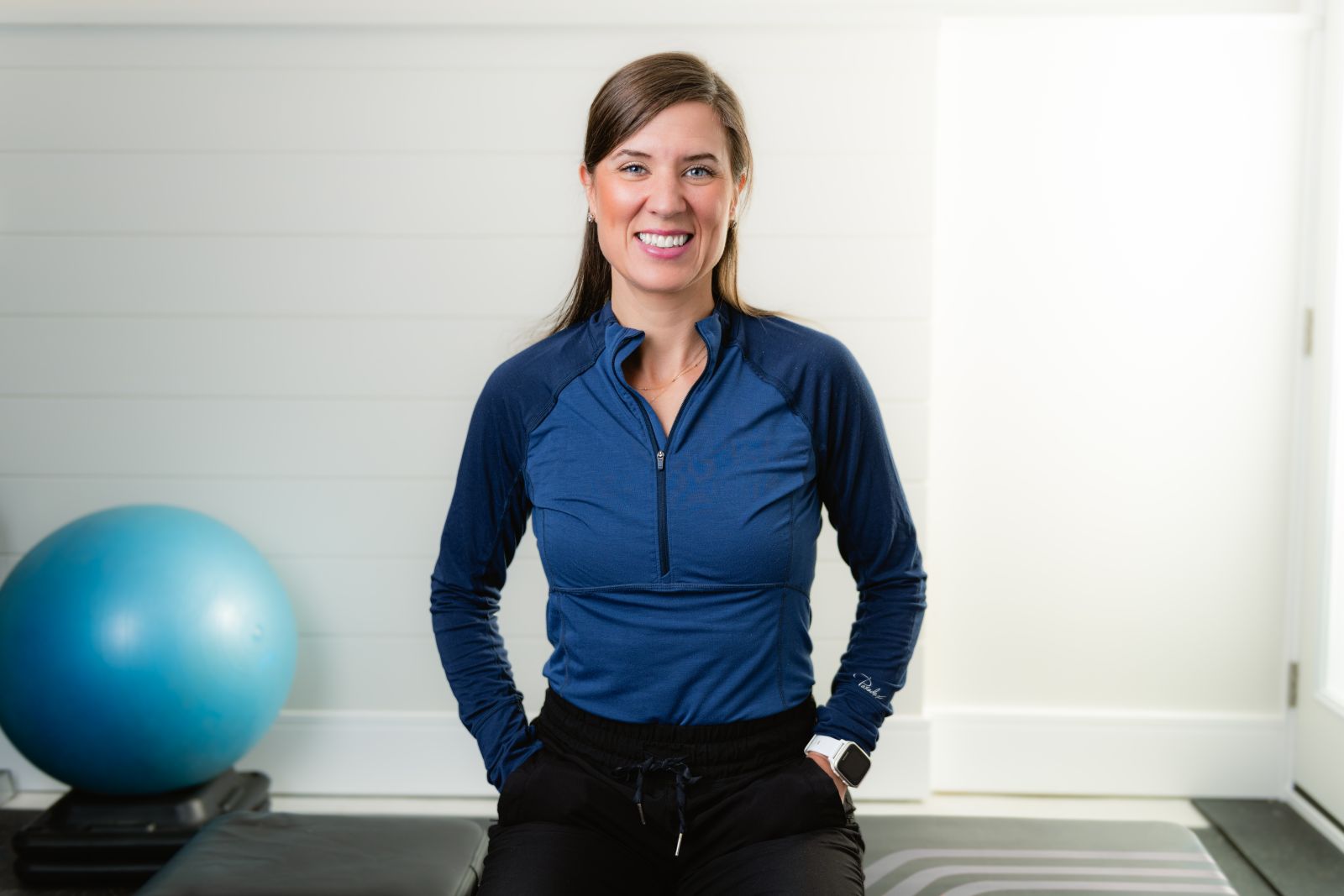
Let's talk about Resistance Training...
Did you know that resistance training is one of the most important things you can do as you age? While “exercise” comes in many forms, not all exercise builds (or maintains) the strength you need for daily life. With resistance training the goal is not just to move — the goal is to challenge your muscles enough that they adapt, especially as you age!
Some exercises are not enough on their own
Many older adults choose exercises like walking, light cycling, gentle stretching, easy classes where you rarely feel challenged, or very light weights that feel easy to lift. While these may be helpful for your general health, circulation, mood, and mobility, they come up short in terms of muscle strengthening. Here's the key: if your muscles are not being progressively challenged, your strength will not improve. You can be active and still get weaker over time if strength work is missing. Walking is excellent, and I do recommend it, but walking alone usually does not build enough leg and hip strength for stairs and chair stands, maintain the strength needed to prevent falls, or support bone health as effectively as resistance training. That is why we need strength-focused exercise in addition to movement and cardio.
Why resistance training is essential as you age
As you age, resistance & strength training can help you stay independent (getting up from chairs, stairs, carrying, housework); reduce fall risk (stronger legs and hips support balance and recovery); protect joints (muscles share the load so joints are less irritated); support bone health (bones respond to safe loading); and feel more confident in your body (less fear, more ability).
The key: you must challenge yourself (safely)
If you don't use it, you lose it! Your muscles change & grow when they get a clear message: “This is hard.” In order for a resistance exercise program to be effective, it must require a relatively high degree of effort, and progress over time. A helpful way to measure “hard” is with the RPE (Rate of Perceived Exertion) scale, from 0 to 10:
- 0–1: resting, no effort
- 2–3: easy, could do this for a long time
- 4–5: moderate, working but comfortable
- 6: challenging, you are focused
- 7–8: hard, you could do only a few more reps with good form
- 9: very hard, almost maximum effort
- 10: maximum effort
If your goal is to get stronger, aim for an RPE of 6–8 during your resistance exercises. That means you can do 8–12 reps of an exercise but the last few reps feel difficult; you can still maintain proper form; and you feel like you could do about 2–3 more reps if you had to. If you're working at RPE 3–5, it may be good movement, but it is often not enough of a challenge to build strength. If it feels like RPE 9–10, it may be too hard, and form can break down, which increases injury risk.
Practical tips to get started (and progress)
1) Strength train 2–3 days per week. 20–30 minutes is enough to start. Rest a day between strength sessions when possible.
2) Focus on “real life” movements. These foundational movements may provide the biggest payoff: sit-to-stand (chair stands or squats); step-ups (stairs or a stable step); hip hinge (a safe “bend and lift” pattern); row / pull (band rows, dumbbell rows); carrying (farmer carry with light-to-moderate weights).
3) Choose the right starting weight. Pick a weight that allows 8–12 reps with good form, where the last 2–3 reps feel hard (RPE 7–8), with no sharp pain. If you can do 12 reps and it still feels like RPE 4–5, the weight is likely too light to build strength. Remember, arm and leg strength differ, so choose lighter weights for arms and heavier weights for leg exercises.
4) Progress gradually using one change at a time. Each of us has a different starting point, so find yours and progress slowly. Every 1–2 weeks, as you're able, choose to add 1–2 reps, add a small amount of weight/resistance, add a second set, or slow the lowering phase (control builds strength). A good sign you should progress: you'd rate your effort at RPE 5 or less, or when you finish your sets you feel like you could easily do many more reps. Mild muscle soreness within 1–3 days after exercise is completely normal and will resolve.
Strength training should feel challenging, not risky. If you have osteoporosis, back pain, or a history of fractures, ask your physiotherapist for individual guidance, since certain movement patterns may need modification.
Common safety rules
- Start with light (or no) weights and optimize your form first before progressing.
- Before each exercise, engage your core & brace your midsection without holding your breath.
- Keep weights close to your body — don't reach far forward with a heavy load.
- Avoid rounding your back while holding or picking up weights. Hinge at your hips instead.
- Avoid twisting while holding weight. Instead, turn your feet.
- Exercise on a stable surface and use supportive footwear.
- Stop the set if you're unable to maintain proper form/posture. Quality matters.
- If you don't know how to safely begin, seek out professional advice.
Walking and staying active are wonderful, but to stay independent and resilient as you age, you also need muscle-building work. Resistance & strength training can be a powerful way to invest in your future self and truly experience how Health is Wealth. And we believe you're worth it! Our PhysioCare at Home team can help — call us today for an individualized Assessment & Treatment Plan.
To Your Health,
Jillian
Physiotherapist & Clinical Director

Invest in your future self through resistance & strength training and truly experience how Health is Wealth!
Therapist's Corner
Resistance training is about loading our muscle tissue. We can do this using our body weight, resistance bands, or weights. Skeletal muscle attaches to bone through tendons — when we strengthen our muscles, we strengthen our bones!
- A well-structured strength program targets major muscle groups including chest, back, arms, legs, & core.
- Canadian Exercise Guidelines recommend strengthening exercises at least 2x/week.
- Compound movements are better than isolated ones (a shoulder press targets more muscles than a bicep curl).
- Try weighted exercises that mimic daily activities: sit-to-stands (from a chair), step-ups, wall push-ups, heel raises.
- Doing resistance exercises and balance work is a great way to lower your fall risk.
- Mild muscle soreness is normal, but sharp pain is not.
It's never too late to build strength! But if you're not ready to check out your local rec centre or gym, give us a call & we can design an individualized strengthening program to get you started, all in the comfort of your home.
Client Spotlight: Susan
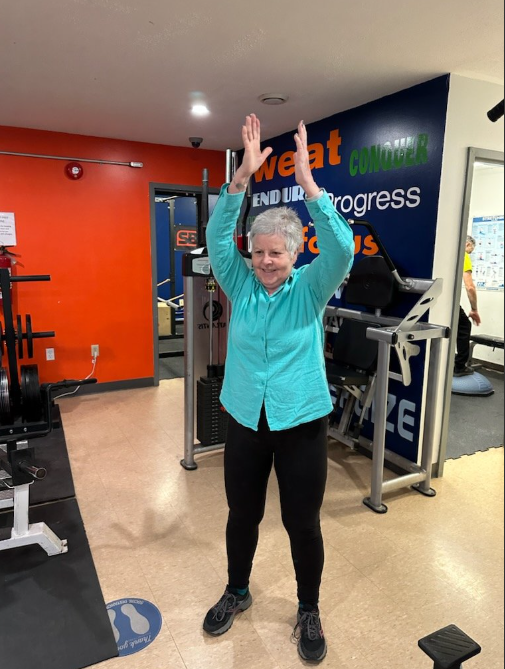
Susan was nominated by her physiotherapist, Pam. Susan has made remarkable gains and has been faithfully doing her exercises, proving that Progress is Possible and Consistency is Key. She is mindful of her restrictions and precautions, but has taken on all new progressions like a champ. Each week they have been able to add balance and strength challenges. Her hard work is an inspiration — congrats Susan!
Nutrition Tip
Nutrition makes a huge difference for seniors who are strength training. As we age, maintaining muscle requires a little more intention, especially around protein and overall intake. Nutrition is what allows muscle to grow, recovery to happen, and independence to improve.
Prioritize protein at every meal. Older adults need approximately 1 gram of protein per kilogram of body weight daily to maintain and build muscle. Spreading protein throughout the day is more effective than eating most of it at dinner. Aim for ~25–30 g of protein per meal, include protein at breakfast (often the most missed!), and choose good options like eggs, Greek yogurt, cottage cheese, chicken, fish, tofu, beans, or protein smoothies.
Don't undereat. Strength training only builds muscle if the body has enough fuel — muscle loss can come from under-eating, not aging alone. Skipping meals reduces muscle gains. Include healthy carbohydrates (whole grains, fruit, potatoes) to fuel workouts, and add healthy fats (olive oil, nuts, avocado) if weight maintenance is a concern.
Focus on leucine-rich foods. Leucine is a key amino acid that stimulates muscle growth. High-leucine foods include dairy (milk, Greek yogurt, whey protein), eggs, chicken, and soy products.
Stay hydrated. Dehydration reduces strength, energy, and recovery. Aim for consistent fluid intake throughout the day (water, milk, soups, herbal tea) and don't rely only on thirst cues, which decrease with age.
Support bone health. Strength training + proper nutrition protects against fractures. Ensure adequate calcium (dairy, fortified beverages, leafy greens) and maintain vitamin D levels (often requires supplementation — check with your health provider).
Eat within 1–2 hours after training. A post-workout snack helps recovery — pair protein + carbohydrates. Examples: Greek yogurt + berries; protein smoothie + banana; eggs + whole-grain toast; cottage cheese + fruit.
Recipe of the Month

Try these high-protein Breakfast Burritos from Canadian dietitian Nicole Osinga.